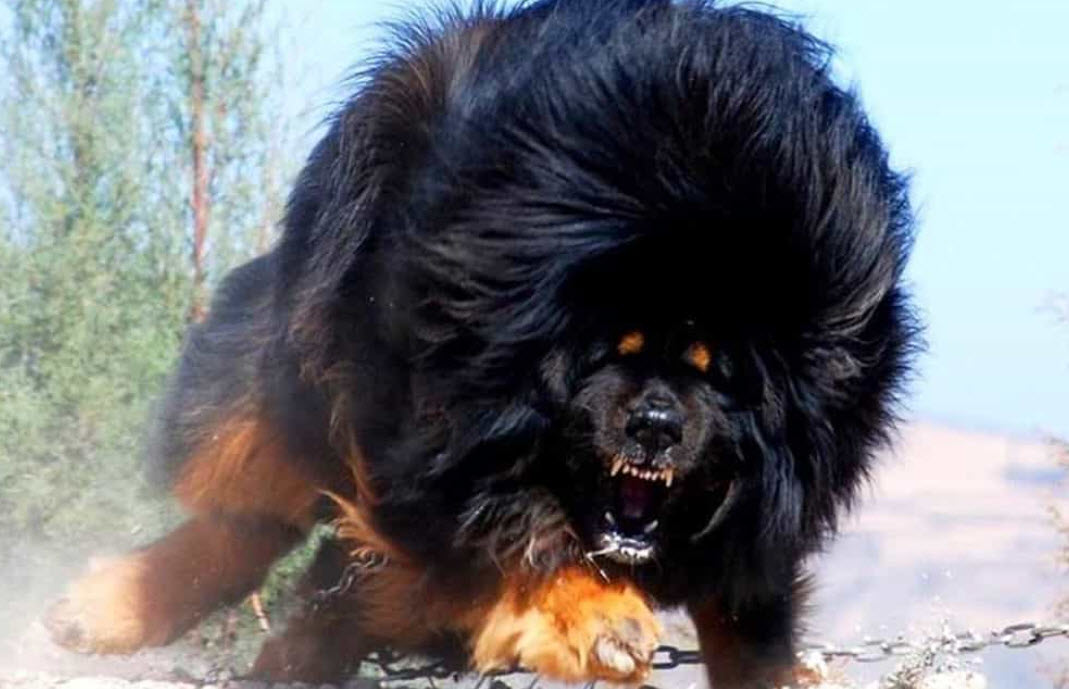
Tibetan Mastiff, belonging to the mastiffs, is a large and fierce dog. Tibetan mastiff dog is one of the world's most ancient breeds, which is a special animal in Asia. More than 2000 years ago, Tibetan Mastiffs were active in the Himalayas and the alpine regions of the Tibetan Plateau with an elevation of 3000-5000 meters. Due to its loyal nature, Tibetan Mastiff is not only the best protection dog for nomads but also the best guard dog for kings and tribal chiefs. According to Tibetans, in pastoral areas, one adult Tibetan mastiff can guard 400 sheep, defeat three evil wolves and make leopards show the white feature, so it's called Heavenly Dog in Tibet. After Westerners see the wonder of the Tibetan Mastiff, they call it “Oriental Supernal Dog”. In Nepali, it's called Bhote Kukur (bhote means someone from Tibet and kukur means dog). In Mongolian, it's called bankhar (bankhar means lion).
The Tibetan Mastiff plays a very important role in the improvement of many famous dogs, such as St. Bernard, Great Dane, Komondor, and Newfoundland, as well as various mastiffs, which have the blood of Tibetan Mastiff. However, due to the special living environment of the plateau and the herdsmen's weak consciousness of bloodline protection over the years, partial original Tibetan mastiffs have merged with the local shepherd dogs, resulting in fewer and fewer pedigree Tibetan mastiffs.

Profile
- Lifespan: 12–15 years
- Avg height: The shoulder height of the male dogs are at a minimum of 66cm, and the females are at a minimum of 62 cm
- Avg weight: 55-80kg
- Coat colours: black, brown-red, black and tan, white, and grey
- Litter Size: 5-12 puppies
- Temperament: Protective, strong willed, stubborn, courageous, dignified, loyal
Tibetan Mastiff Appearance
A pedigree adult Tibetan Mastiff weighs about 60 kg and is about 1.2 m long and 66 cm high. It has a thick coat of fur, strong muscles, strong limbs and torso and full of strength, a long tail lifted high or bent to one side, and four-point eyes (yellow or white dots on the eyebrows). Interestingly, under cold weather conditions, the fur is thick and soft as wool, resistant to cold, and can sleep peacefully in ice and snow; however, in warm weather conditions, the fur is very rare.
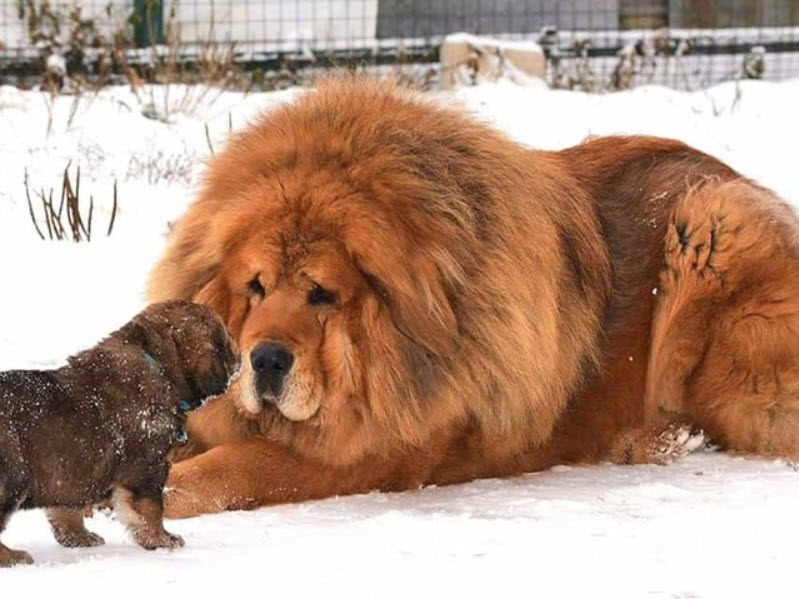
Purebred Tibetan Mastiffs are most commonly seen in the vast pastoral areas. According to the lineage, the Tibetan Mastiff is roughly divided into two types: lion head and tiger head. The lion head's skull is small and the nape hair is long while the tiger head's skull is large and the nape hair is short. The coat colors include fire mastiff (brown-red), snow mastiff (pure white), Black & Tan (black back and red hoof), yellow mastiff (golden), and black mastiff (black is not pure black, but slightly white hair on the chest and limbs).
Among these, red-brown and pure white are considered rare and precious. The black back and yellow belly coloration is more common, constituting approximately 70%, with the variant of black back and red-brown belly being the most prized. Wolf-gray Tibetan Mastiffs are renowned for their large size and fierce temperament.
Tibetan Mastiff Character Features
The real Tibetan Mastiff has the kind of dignity of a king. The harsh living environment on the plateau not only creates the Tibetan Mastiff`s strong willpower but also gives the Tibetan Mastiff the king's temperament. It is lonely and arrogant, mighty and brave, noble and elegant, loyal and dedicated, and its qualities of endurance to hunger, cold, and resistance to all hardships are also its most attractive characteristics. Therefore, Tibetan Mastiffs are usually good at protecting territory, protecting food, and attacking. In the territory, the Tibetan Mastiff is hostile to strangers but loyal and extremely affectionate to the owner. As a guard dog, it is faithful and reliable.
Personality
Our client with a Tibetan mastiff No matter how fierce it is, Tibetan Mastiff has always maintained absolute loyalty to its master. Besides, it is difficult for anyone else to approach. Another personality of the large dog breed is that, like a tiger, it is unwilling to be touched by its tail, which can easily irritate it. Puppies and young mastiffs, especially those under 3 years of age, can be surprisingly destructive. Tibetan Mastiff has a particularly strong bite force. They know how to "open the way with their mouths" to pass through doors and iron fences, so when building a kennel, you must pay attention to the sturdiness.
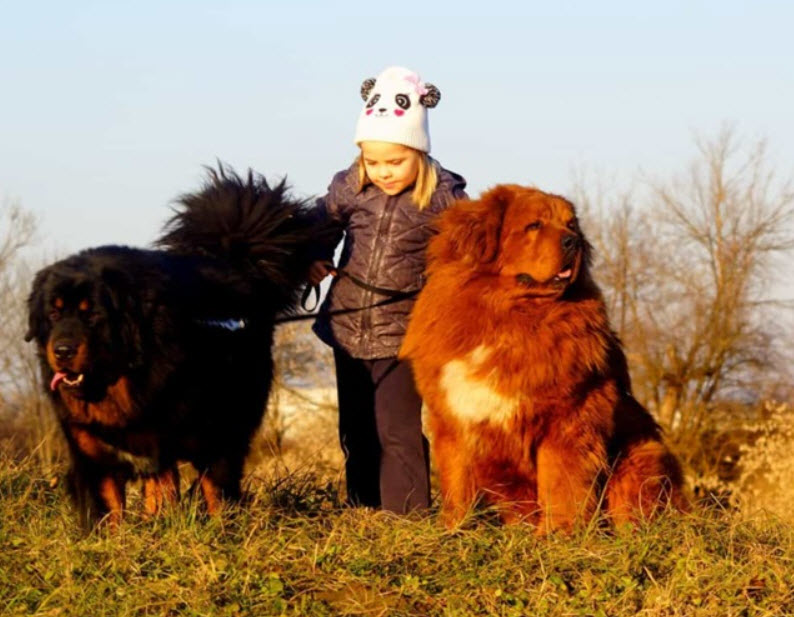
Many Tibetan mastiffs like children, but strange children often arouse their ferocious instincts, because they don't understand that children's normal running, jumping, playing and screaming are not aggressive behaviors. So be careful not to let children come into contact with them alone. The Tibetan Mastiff has a high IQ and a very independent personality. They usually do not have good obedience and activeness, as well as do not like to participate in organized activities.
Health Concerns
The average life expectancy of the dogs is 12 - 16 years, and a few of them can even live to 20 years. Certainly, it’s closely tied to factors like environment, diet, and feeding. Generally speaking, even freely roaming in Tibet, these dogs can live to be around 15 years old.
The health problem of Tibetan Mastiffs is closely linked to factors such as genetics, environment, and nutritional status. Thyroid disease is a major issue in Tibetan Mastiffs, with up to 30% of the breed affected.
Due to genetic factors and others, there is a risk of cardiovascular diseases. Strict control of their diet and regular exercise can effectively reduce the risk of cardiovascular diseases.
Due to the high facial skin folds, Tibetan Mastiffs are prone to issues like corneal ulcers, eyelid drooping, and tearing. It is helpful to prevent these problems by regularly cleaning the facial area and ensuring their diet includes an adequate amount of vitamin A.
Besides, orthopedic diseases are a serious problem, especially hip dysplasia and elbow dysplasia. Tibetan Mastiffs are also susceptible to thyroid, skin, and ear canal disease, etc. Breeders need to provide a high-quality living environment and monitor their health closely.

Caring for Tibetan Mastiff
Tibetan Mastiff needs to change its hair at least once a year (sometimes twice). During hair removal, it is best to comb it every day to stimulate the cortical glands and speed up hair removal. Remember that the Tibetan Mastiff is a huge dog, and it takes 4 weeks for the Tibetan Mastiff to completely shed its undercoat.
For male and female Tibetan mastiffs over 8 months of age, you should try to isolate them, otherwise, the phenomenon of illegal mating or early mating may occur, which will affect the continued growth of the dog's body. Letting immature male and female Tibetan mastiffs contact and mate on their own is not conducive to their development and temperament. Especially male Tibetan mastiffs, often have irritable temperaments, unstable personalities, irritability, and aggressive behavior.
Tibetan Mastiff History
Tibetan Mastiff The Tibetan Mastiff has a history of thousands of years and is the oldest dog breed. It was used as a guard dog since the Spring and Autumn Period (771 BC - 476 BC). According to the records, the nomadic people(Qiang) at that time domesticated the wild dogs in order to cope with attacks and threats from other beasts. This should be the prototype of the earliest Tibetan mastiff. In the extremely harsh living environment on the Tibetan Plateau, the herders chose individuals who were large and robust, fierce and loyal, and good at herding animals to breed their offspring. The Italian painter Castiglione drew pictures of "Ten Dogs" in accordance with Emperor Qianlong's will, and the last one is “Cang Ni”, which is a Tibetan mastiff.
However, whether in the early modern times or in the contemporary, it was Westerners who first recognized its value and promoted it. At the beginning of the 18th century, the British began the cultivation of Tibetan Mastiffs and established pedigree files. In 1947, the Tibetan Mastiff was first brought to America. In 1973, the United States established the American Tibetan Mastiff Conservation Association in order to better protect, understand and breed this endangered dog breed, and began to protect, research and classify Tibetan Mastiffs.